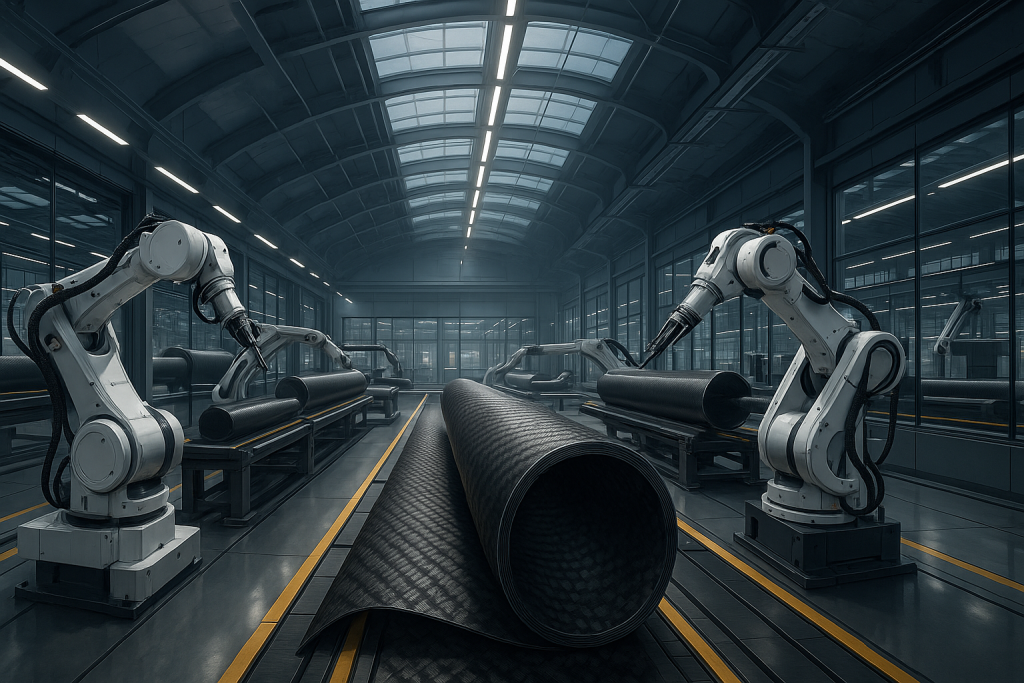
Modern manufacturing systems are increasingly shaped by material innovation, where durability, precision, and sustainability depend on engineered inputs such as pyrolysis carbon black that strengthen structural applications across multiple industries. From heavy industrial frameworks to precision coatings and printing systems, advanced carbon-based materials are quietly redefining how strength and functionality are built into everyday products.
These material advancements also enable manufacturers to improve efficiency while reducing waste across production cycles. As industries continue to demand higher performance standards, such innovations are becoming essential for long-term reliability and scalable industrial growth.
Material Backbone of Modern Structures
Structural applications in manufacturing rely on materials that can carry load, resist stress, and maintain stability over long operational cycles. Unlike simple mechanical parts, these systems demand consistency at every level of production, from raw material selection to final processing.
In modern engineering environments, structure is not only about visible frameworks but also about internal reinforcement at microscopic levels. Materials must resist deformation, handle vibration, and remain stable under varying environmental conditions. This makes material science one of the most important pillars of manufacturing evolution today.
Reinforcement Evolution in Composites
Composite materials have changed the way industries think about strength. Instead of relying on a single material, engineers now combine multiple components to achieve better performance. These combinations allow manufacturers to balance flexibility with rigidity, ensuring that structures can withstand both static and dynamic loads.
The evolution of reinforcement techniques has made it possible to design systems that are lighter yet stronger than traditional materials. This shift has reduced production costs while improving efficiency in transportation, construction, and industrial machinery sectors.
Carbon-based Integration in Structures
Carbon materials have become central to modern structural engineering due to their ability to enhance mechanical strength and thermal stability. They improve load distribution and reduce stress concentration within materials, making them ideal for high-performance manufacturing systems.
One such innovation is birla continua, which represents advanced material solutions designed for structural reinforcement in industrial applications. Its integration into manufacturing processes allows for improved durability and consistent performance across demanding environments.
Carbon-based integration is now widely used in sectors that require long-term reliability under mechanical stress, including automotive components, industrial frameworks, and engineered surfaces.
Thermal Stability in Manufacturing Systems
Heat management is a critical factor in structural applications. Excess heat can weaken bonds within materials, leading to deformation or failure over time. Manufacturing systems must therefore include materials that can withstand high temperatures without losing structural integrity.
Advanced carbon-enhanced materials help regulate heat distribution, preventing localized thermal stress. This ensures that components maintain their shape and performance even in continuous high-temperature environments such as industrial furnaces, engines, and processing systems.
Thermal stability also contributes to energy efficiency, as systems require less cooling support and experience fewer operational disruptions.
Industrial Coatings and Surface Protection
Surface engineering plays a vital role in protecting structural components from wear, corrosion, and environmental exposure. Coatings act as a barrier between the base material and external conditions, extending product lifespan and improving performance reliability.
In advanced manufacturing, carbon black ink is widely used in coating and printing applications where conductivity, durability, and uniform pigmentation are required. It enhances surface functionality while maintaining structural consistency in industrial components.
Such coatings are essential in electronics, packaging, and precision manufacturing systems where both appearance and performance matter.
Recycling Innovation in Carbon Systems
Sustainability has become a major focus in manufacturing, pushing industries to explore recycling-based material solutions. Carbon recovery technologies are playing a growing role in reducing industrial waste and improving resource efficiency.
A key development in this space is pyrolysis carbon black, which is produced through the thermal decomposition of waste materials. This process not only reduces environmental impact but also creates reusable carbon resources for industrial applications.
Recycled carbon materials are increasingly being integrated into structural manufacturing systems, helping industries reduce dependency on virgin raw materials while maintaining performance standards.
Load Distribution and Mechanical Strength
Structural applications depend heavily on how materials distribute mechanical stress under load. Uneven stress distribution can lead to cracks, fatigue, and eventual failure. Engineers therefore design systems that spread force evenly across the entire structure.
Carbon-enhanced materials improve this distribution by strengthening internal bonding and reducing weak points. This ensures that structures can withstand repeated loading cycles without significant degradation.
This principle is especially important in industrial machinery, transportation systems, and construction materials where long-term reliability is essential for safety and efficiency.
Precision Manufacturing and System Control
Modern manufacturing is driven by precision and control at every stage of production. Advanced material processing techniques allow engineers to fine-tune structural properties based on application requirements.
From particle size control to thermal treatment, every step influences the final performance of the material. This level of precision ensures that structural systems meet strict performance standards across industries.
Digital monitoring and automated manufacturing systems have further improved consistency, reducing defects and enhancing scalability in large-scale production environments, especially in processes involving carbon black ink.
Future Direction of Structural Materials
The future of structural manufacturing lies in the development of smarter, more adaptable materials. Researchers are exploring hybrid composites, nano-engineered carbon systems, and energy-responsive materials that can adjust to changing environmental conditions.
These innovations aim to create structures that are not only stronger but also more efficient and sustainable. As industries move toward greener manufacturing practices, material science will play a central role in shaping next-generation industrial systems.
Continuous improvement in carbon-based technologies will further expand possibilities in design, performance, and environmental responsibility.
Conclusion
Structural applications in manufacturing systems are evolving rapidly due to advancements in material science, particularly in carbon-based reinforcement technologies. From thermal stability and load distribution to surface protection and recycling innovations, every aspect of industrial design is becoming more efficient and sustainable.
In this growing landscape of advanced material engineering and industrial transformation, companies like Birla Carbon continue to be associated with the development of high-performance carbon solutions that support modern manufacturing systems and structural innovation, especially through advancements in birla continua.